"And this is important...why?"
EXCELLENT question.
That question that looms behind all that you do, specifically if what you do is research.
Great, good to know, why should I care?
Lately I am having trouble answering this question. I have learned SO much about the Guna people and about how albinism is understood and treated here in Panama and Guna Yala and how that has drastically changed through the past few decades. But now I am questioning what value there is in that information besides the exotic interest value.
When I mention my research people usually seem quite interested in the material. I find a lot of that has to do with the fact that many people I interact with outside of Guna Yala have little to no knowledge about albinism within the human race. I have become a good story teller. I can tell you all about people who have albinism in Uganda and people who have albinism in Guna Yala and how different those two societies treat the condition. Most frustrating though is the morbid curiosity in the huntings that recently began in the Lake Victoria region of eastern Africa. Many react with shock, astonishment. Disturbingly, they seem more entertained than anything.
After presenting my work on albinism in Uganda to a group of peers at Beloit College, a professor explained to me the idea of "death by culture." While the main point of my paper was that people with albinism in eastern Uganda have more to fear from the sun than they do from hunters, the take-away by most of the audience was "Ugandans are hunting albinos". You take an already exoticized population of "Africans" (because yes, they are considered one people by many) and you add a further unknown of "albinos". Mix in some good ol' witchdoctors and you've got yourself a damn fine interest story. And this is precisely what the media and many organizations who work with albinism have banked on. "Save the albinos! Stop the killings by their African brothers!". People seem all too eager to believe that those poor Africans are just so ignorant they hunt their own people; it's in their culture.
What is only mentioned in passing, or maybe not mentioned at all is that these killings only began in 2006 as an economic ploy by a small group of people. Additionally, the purchasers of the potions made by these witchdoctors are incredibly wealthy, paying as much as $75,000 US dollars for what they believe might bring them more fortune or win an election. They are NOT your average east African. MOST Ugandans and east Africans are outraged by the killings. We cry outrage that around 75 people have been killed by these huntings while the majority of people with albinism, a number estimated at 150,000 in Tanzania alone, will not live beyond the age of 30 because of skin cancer.
SKIN CANCER. This death could be prevented or at least staved off for another couple decades with education. With the knowledge to use, and the access to, covering clothing and sunscreen.
But people don't want to hear about that. Death by basal cell carcinoma isn't nearly as interesting as being hunted. Tragically, if people took interest, we could easily prevent the deaths of THOUSANDS of people. But what is missing is knowledge and initiative. By and large Ugandans still fear people who have albinism and many people with albinism have had no way of learning some of the basic ways to prevent skin cancer. As a result, people with albinism in Uganda and much of east Africa are socially rejected and die at an early age (but not by hunters).
The purpose of my work initially was to determine if there was something in Guna Yala that we were missing in Uganda – something that enabled the Guna people to accept albinism; something that allowed people who have albinism to become leaders within their own society rather than feared outcasts. Once found, the task would be to somehow translate that into Ugandan societies.
What I have determined is rather simple: Education and visibility. Gunas were exposed to the condition as a result of their high rate of albinism (1:145). The establishment of schools gave people who had albinism a future. Since they couldn't safely work in the fields or fish as traditionally all Gunas did, they could now become educated professionals: teachers, lawyers, and authors. This success also worked to increase people's exposure to the condition, allowing them to interact with people who had albinism in a capacity that would foster respect.
The story of how people who have albinism have gone from being killed at birth to now, being political leaders is an interesting one to be sure; but what does it have to teach us that we don't already know? The Uganda Albino Association already knows they need to educate the public about albinism and that they need to get more kids with albinism in schools and more adults into jobs.
While this blog is typically a one-way form of communication, I would love to hear from the people reading this what they see as important about this research. Perhaps I need some fresh eyes to see the value in what I do. I would hate to think that I am wasting U.S. tax dollars to learn something we already know in theory when that amount of money could have bought thousands of bottles of sunscreen, and saved a lot more lives.
Showing posts with label international relations. Show all posts
Showing posts with label international relations. Show all posts
Monday, June 11, 2012

Sunday, April 15, 2012
Going my way? (Adventure to Tigre Part II)
 Woke up surprisingly unsurprised as to my location. There
was a brief, confusing conversation regarding whether or not I had a towel, but
then I was off to shower as best as I could without soap and with a borrowed
towel (Douglas Adams would be disappointed). There is a shower-head of no use,
(Similar to the toilet and sink), but there are barrels of fresh water. Still,
I find myself longing for my open-air shower and toilet above the ocean in
Nargana. I freshen up as best I can and am back in my clothes from the day
before. Not ideal, but no one cares.
Woke up surprisingly unsurprised as to my location. There
was a brief, confusing conversation regarding whether or not I had a towel, but
then I was off to shower as best as I could without soap and with a borrowed
towel (Douglas Adams would be disappointed). There is a shower-head of no use,
(Similar to the toilet and sink), but there are barrels of fresh water. Still,
I find myself longing for my open-air shower and toilet above the ocean in
Nargana. I freshen up as best I can and am back in my clothes from the day
before. Not ideal, but no one cares.
Coffee and a small roll later, we are back to open Erasmos’
office. What someone might consider a waste of time, I consider invaluable time
spent talking to Erasmos about our thoughts, experiences, culture and more. It
is sad that I have had to learn how to sit and to pass time with another person
without thinking there are more important things to be doing. Periodically we
walk around to complete small tasks or seemingly just to chat with friends or
chill at home for a spell, where the women have their hands full dealing with
the barrels full of unhappy crabs.
The boat I was told would take me back to Nargana was, for
reasons I am unsure of, unable to leave at 11:00am. So now we wait until 1:00
for the delegates coming back from the other island. I am enjoying my time in
Tigre, but I am growing increasingly concerned as I have just used up the end
of my “female supplies” and I was really not looking forward to that
conversation in Spanish. For the guys I’ve just grossed out by this last part,
deal with it.
We head back out to the beach office while the ladies cook
up some crab for lunch. I eat my first full crab with Yam soup and I must say I
enjoyed it. - Earlier I asked if I could give something in return for the
hospitality. Erasmos said it was up to me, but if I would like I could pay $2
for rice. I gave him $4, not wanting to insult, but deeply gracious for the
hospitality he and his family were showing me. - I feign a full stomach so I
don’t have to figure out how in the hell to eat the actually body of the crab.
It looked like a pretty violent and difficult task when I watched Erasmos.
At 1:00 we walk to the dock in hopes of flagging down my
boat from the day before. At first I thought the boats usually stopped at
Tigre, then I came to understand that you have to wave them down and hope they
stop…I think. We come to the dock and there is a banana boat unloading its
goods for the women of the village to pick up. Erasmos talks to them and it
turns out they are going to Nargana and would have no problem taking me along.
But first they were stopped there for lunch. Erasmos and I express our
gratitude for the visit and hopes of a return and then he leaves for his office
leaving me to wait with the boat.
 |
| Trading Boats Docked in Nargana |
I sit in the shade of the boat on the dock and speak with a
Panamanian guy who was traveling and working on the boat to get back to his
city near Colon. One of Erasmos’ sister-in-laws comes to pick up her load of
bananas, but rips her bag trying to carry what surely must be half if not more
of her weight. Since I was waiting for who knows how long, I started to pick up
the fallen bananas to help her take them back home. Along the way people call
out to her and she responds with a big grin on her face. Everyone is smiling
and laughing at the sight of us and I hear her say “mergi” several times, which
means “American” from the United States, so I am lead to understand that she is
commenting in some fashion on having her own U.S. delivery service.
I drop the bananas off at the home, where I am met with more
laughter and gracious thanks. “Gracias” they tell me, and I return their thanks
in Guna, “nuedi,” once more before heading back to the dock. There I sit
another half hour, maybe an hour talking with the workers on the banana boat. I
realize how strange and maybe even dangerous this might sound to people back
home (this story may need to be edited for my Mimi). Just a few weeks ago I was
telling another Fulbrighter that I couldn’t believe that she had traveled by
herself in South America. Now I was essentially doing the same thing. But
Samantha told me something that I have found to be so true: you are never
really alone. If you are doing it right, you are meeting people and forming
relationships and someone is always there to get you to the next handoff. You
just have to be open and to trust your instincts and intelligence. This banana
boat would be my next handoff. At the beginning of the trip I would have never
thought of doing this, but now it was merely the easiest way to get to where I
needed to be next. It is amazing the level of fear I have had to get over just
to trust my fellow human being.
NOTE: I am not suggesting to readers to travel on random
ships of strangers. All of this is relative to my personal experience in Guna
Yala. There are certainly times and places where this would be a very bad idea.
All the romantic banana boat talk aside, the boat bringing
back delegates shows up before the crew had begun their lunch, so I bid them
thanks and farewell but opted for what was now the quickest and easiest way to
Nargana.
The delegates welcomed me back on with warm smiles.
Surprised I had stayed the night, but not bothered in the least to have me
on-board. I couldn’t help but smile as we rode “home.” For them I had done
nothing special, but for me it was a full 24 hour lesson in patience, trust and
openness. And it only cost me $4 plus $6 for gas.
 First order of business now that I was back home, (which is
really what the Sailar’s house has become for me in less than 2 weeks), I
needed a bath. Another surprise was that I really felt clean and refreshed
after my bucket shower. My family in Uganda would be proud that I’ve gotten my
technique down. The short hair, of course, makes all the difference in the world!
First order of business now that I was back home, (which is
really what the Sailar’s house has become for me in less than 2 weeks), I
needed a bath. Another surprise was that I really felt clean and refreshed
after my bucket shower. My family in Uganda would be proud that I’ve gotten my
technique down. The short hair, of course, makes all the difference in the world!
I suppose there’s some sort of symbolism in that: the
cleansing of myself through a manner once foreign and thought unclean. The
embracing of this new method/life made easier through the leaving behind of my
old notions of what is beauty/better.
Sunday, March 4, 2012
Living in a Desktop Image
I believe I may be in the running for having the best life ever. Not to make you all feel bad, but I'm about to do some quick comparisons:
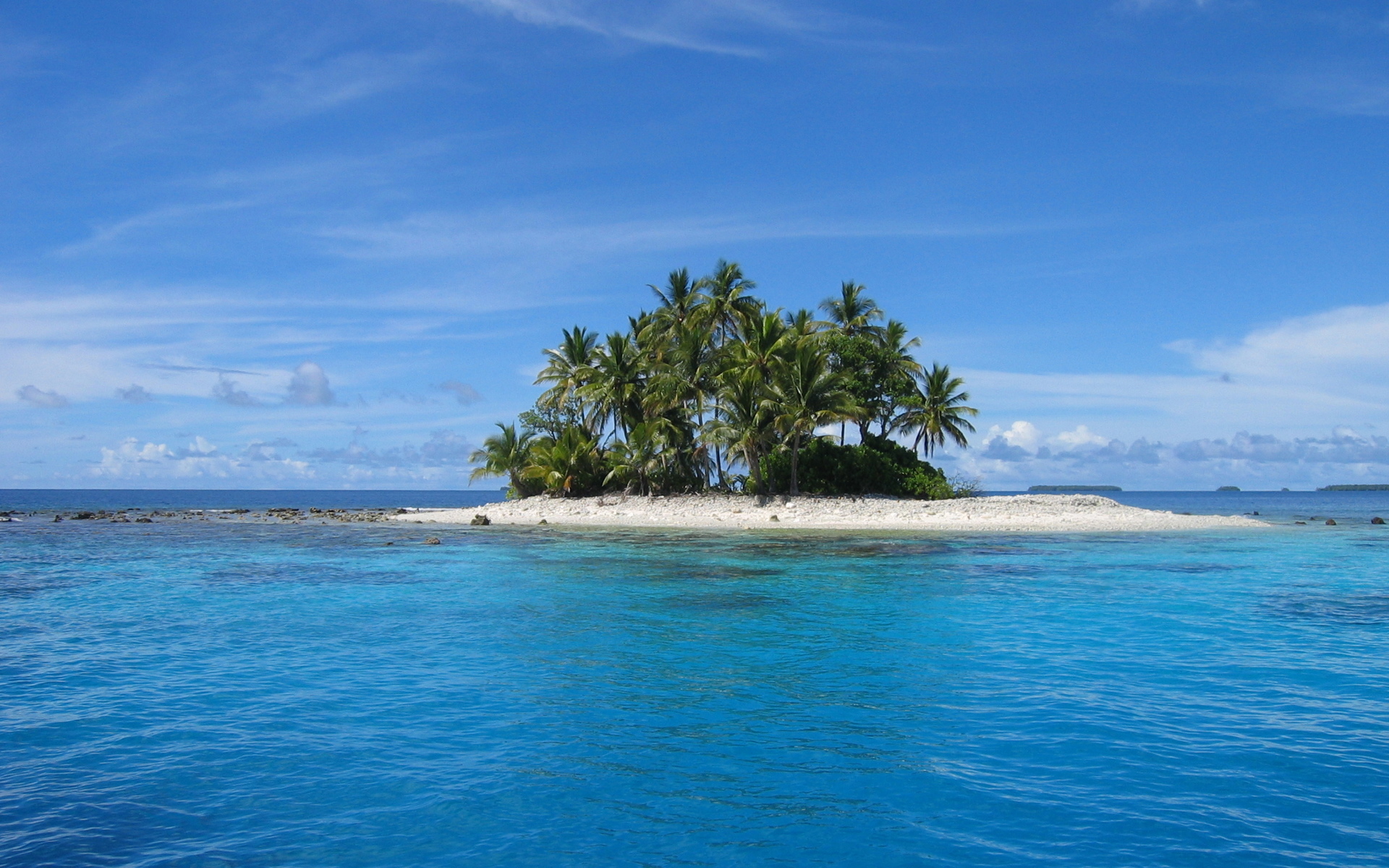 |
| From Only HD Wallpapers website |
Above, you see the typical island oasis image often relegated to desktop fantasies by many of those who spend their days laboring in front of a computer.
This was my backdrop for the past 9 days, which I spent without touching a computer or a cellphone:


The Food:
Did you know the average supermarket apple
is 14 months old? - We bought this beautiful selection of fruits and veggies off a kayuko - sort of like a farmer's market that comes to your door, except it's a canoe that comes to your starboard.
Normally we are accustomed, (In the U.S. at least, particularly in landlocked areas such as my hometown) to seeing our seafood in gift wrapped packages of cellophane and styrofoam.

The tuna you see below was caught that day and sold to us a few meters from where it was caught for $1 each. Lobsters were $3 each.

Another dining option was free fish speared by our very own Captain Kevin.
The Neighborhood:

Downtown living: On the larger islands you can be in walking distance of your job, the grocery, hospital and school. The big choice to make is whether you prefer running water or electricity...
Adjoined islands Carazon de Jesus and Nargana (pictured to the left), are one of the more urban islands, with a mixture of huts and concrete homes plus electricity.
Population of each inhabited island town ranges from less than or around 100 to a couple thousand.
 |
| The Established Locals and New Neighbors |
A great place to raise a family:
There is no shortage of kids, as women start having babies pretty much as soon as they are biologically capable.
 |
| Public Pool/Playground |
Kids have free range of the islands. The local playground is close-by and the swimming pool is crystal clear! Best of all there are no membership fees!
 |
| Morning traffic |
 |
| Meeting Together for a Potluck |
You can't beat that morning commute! (I am compelled to admit the sailing community tends to be a bit geriatric).
Each night I was lulled to sleep by the calming rock of the boat, the sound of the surf and the glow of the moon and a sky full of stars.
Yesterday I stepped out of that desktop image with sea legs and some more melanin to ironically complement my growing understanding of albinism and how it is understood among the Guna people. I left the calming surf, the fresh ocean breeze, and the lulling rock of the Amuri Mina sailboat and returned to the unnerving sirens and tones of the city, the smog and the frustrations of the tranque (Spanish for traffic jam), and the solid tiles of my 5th floor apartment (which my inner ear still tells me is rocking).
I am glad to have fresh water and a shower, but I will greatly miss my pool/immediate air conditioner, the fresh and cheap food, and the ship's dress code; i.e. as little as you feel comfortable wearing.
This blog post would go on too long if I were to divulge every wonderful moment. To meet a nice balance between telling you what I experienced and meeting the demands of an easily digestible blog post, I will highlight a few of my favorite moments in a list:

- Rocking in the hammock between the masts of our sailboat in perfect peace as I looked on the beach lit by moonlight; its rays reflecting off the white, pristine sand, while being absorbed into the silhouetted palm trees.
- Guna children enjoying their childhood in the best playground there is. Their freedom to explore and freedom from stress is evident in their broad smiles and messy clothes. (It is my belief that there are very few occasions when small children should be wearing clothes without grass stains or dirt).
- Uagi's celebrity status. At every island we were greeted with inquiries as to the baby Uagi's whereabouts. A charming 2 month old, the son of Captain Kevin and Julie, Uagi ("Dolphin"in Guna) gained his popularity in his parents' decision not to return home to Canada or Germany, but to have their son on the island of Nargana.
- Snorkeling in the reefs. The water is so clear one almost doesn't need the mask and snorkel. An entirely different and incredibly diverse world lies just off-shore of many of the Guna Yala islands.
Hopefully what will come next is my move to Guna Yala for April and the beginning of May. I plan to live with a Guna family, probably on Nargana, and to spend this time interviewing and getting to know the people of Guna Yala. After one week in this tropical paradise, I decided it wouldn't be too difficult to stay a few more...
* If you or someone you know is interested in sailing in San Blas, I HIGHLY recommend Captain Kevin and his Sail San Blas tours.
* If you or someone you know is interested in sailing in San Blas, I HIGHLY recommend Captain Kevin and his Sail San Blas tours.
Tuesday, February 14, 2012
How the “3rd world” prepared me for the “2nd”
I’m going to take a moment to explain that I do not agree
with the labeling of countries as if they are all attempting and should attempt to attain the same things as the United States. Similarly, I dislike the term “developing”
versus “developed” when referring to countries. Nevertheless, this is how many people understand and
categorize countries of the world, because it is easy and because the US and Western Europe dictates what is "right" for countries. This entry is not meant to say that Uganda
is worse than Panama which is worse than the United States. I hesitated a long
time to write this blog because I did not want to give such an impression.
Rather, I want to explain how my experience living for 4 months in a culture
and a country very different in so many ways from my own was essential to my
ability to now live in another foreign country, that is not so different, but
foreign nonetheless, for almost a year.
There were a lot of factors that went into my choice to go
to Ghana for 2 months and Uganda for 4 while I was in college. I could fill many a blog with my
interest in the Sub-Saharan area of the continent, but instead I will link you
to my blog I kept while in Uganda.
If I could give advice to anyone thinking of traveling
abroad it would be:
1. Go somewhere you would never go on your own
2. Go somewhere where you will be a minority.
Both of these aspects of my study abroad experience were
difficult and trying, but they pushed me and taught me in ways I could never
anticipate or learn in any other way.
I won’t lie, living in Ghana for 2 months and Uganda for 4
was hard. My bad experience in Ghana, however had more to do with the American
organization I was with, so I will focus on Uganda, which is where I spent more
time anyway.
 In Uganda I went through most every stage of culture shock,
which is basically the 7 stages of grief. I would say it was only in the last 2
weeks I was there that I reached a sort of acceptance/acclamation stage. Before
that, every day was a struggle to adapt and learn. I spent far more time
thinking of home than I would care to admit. We on the program would call it “cutting”,
“food cutting” was when you would obsess over something like tacos from taco
bell, “relationship cutting” was when you talked over who you may or may not
have to look forward to when you came home, as almost all of us were in some
sort of limbo with significant others back home.
In Uganda I went through most every stage of culture shock,
which is basically the 7 stages of grief. I would say it was only in the last 2
weeks I was there that I reached a sort of acceptance/acclamation stage. Before
that, every day was a struggle to adapt and learn. I spent far more time
thinking of home than I would care to admit. We on the program would call it “cutting”,
“food cutting” was when you would obsess over something like tacos from taco
bell, “relationship cutting” was when you talked over who you may or may not
have to look forward to when you came home, as almost all of us were in some
sort of limbo with significant others back home.
Living in Uganda, we learned to live without a lot of what
was commonplace back in the states. We learned, but that doesn’t mean we didn’t
miss it. More than a few of us had dreams about having washers, as all of us
hand-washed our clothes. An
unhealthy tactic I developed when going out or on trips was not to drink very
much water, as the bathrooms were few and their sanitation was typically
atrocious. I began to prefer the outdoors or even holes in the floor to actual
toilets.
 |
| Public Restroom as a Kampala Gas Station |
Still some things I really did adapt to and enjoy. I got
used to the smell of the city, which many times included trash, sewage and
livestock. I accepted that sometimes my food might have an ant or two in it. Though
I desperately missed things such as raw vegetables and ice cream, I started to
look forward to matooke and gnut sauce, and I still miss Obama chapatti. I
enjoyed the public transportation including the motorcycle taxis. I liked only using a cell phone
ever-so-often and I enjoyed the focus and intensity given to me by having
limited access to the internet and TV.
 Most important to my current work, Uganda taught me how to
network and how to present myself as a legitimate professional. I admit that my
status as a US citizen gave me much undeserved credibility. I was able to
interview high-ranking officials and arrange interviews with organizations on
the spot. Not that I could have never done this in the US, but I would never
have thought to try before.
Most important to my current work, Uganda taught me how to
network and how to present myself as a legitimate professional. I admit that my
status as a US citizen gave me much undeserved credibility. I was able to
interview high-ranking officials and arrange interviews with organizations on
the spot. Not that I could have never done this in the US, but I would never
have thought to try before.
Uganda
gave to me a “why not?” attitude and a confidence within my own ability to
enact change. Another wonderful skill my experience gave me was an ability to
wait, which is truly a gift. “African Time” runs slower than we expect in the
U.S. and I learned to anticipate and be ok with that. (A big help was to stop
wearing a watch). I also learned to go with the flow and to improvise. By the
time the group of us left Uganda, we knew that if something went wrong on our connecting
flights and we couldn’t make it home on-schedule, oh well, we’ll get there
someday.
So how does this translate to Panama?
I have begun to judge this in many ways against remarks I
have heard from expats here, travelers in the hostel, or even other
Panamanians. Essentially I feel like I can one-up any of the experiences I have
had here so far.
 “The service here is so poor”
On several occasions in Ghana I
was told that I could not have two different menu items simply because “they do
not go together”.
“The traffic is horrible, no one can drive”
In Uganda there is a saying “If
you drive in a straight line in Kampala, than you must be drunk”. Here there
are very few motorcycles and I have yet to see a cow or a goat in the middle of
the road.
“I feel like I stick out so much here”
 |
| Someone's adopted in this family... |
Panama is a city of immigrants with a long history
of colonization and intermixing between native Panamanians and Spanish. If I
don’t open my mouth and dress right, I can go relatively unnoticed. NOT the
case in Uganda.
“Nothing starts on-time”
I would estimate Panama time is 15-an hour late at most. Uganda : 1-2 hours, Northern Ghana: 2-3 hours
Living in this city, I am never want of the necessities:
water is clean out of the tap and electricity is dependable. And I have all of the niceties: I have
wifi and a washer in my apartment
and ice cream is within walking distance. Yes, I still get homesick, but it is
always for people, not things. That being said, I chose to live more simply
than I have in the states. I have yet to buy new clothes, and what I buy is
typically the cheapest off-brand I can find. Yet, my life here is more than
comfortable and it is comforting to know that I can live with a lot less.
A blog for another time is the recognition that I SHOULD
live with a lot less.
Thursday, February 2, 2012
We're Not Racist in Panama, But...
"If you want to have a conversation about politics, talk to the taxi drivers of the world."
- Michelle Jackson (fellow Fulbright Researcher)


Sometimes I am content to sit in silence, and taxi drivers here in Panama seem willing enough to replace conversation with talk radio. But I must say that I have enjoyed most every time that I have ventured to start a conversation with a taxi driver. The times that I have not enjoyed, have still been informative. For instance, the time I tried to haggle with a taxi driver. He lectured me for the next 20 minutes (the entirety of the ride) on his personal method of calculating exactly what the fare should be while displaying his clearly hurt feelings that I would insinuate he was trying to overcharge me for being a tourist. I apologized and calmly remarked that I understood, but that I had paid 1/5 less of his price to go the exact same distance with another cab driver. To this, he interestingly enough had less to say.
One of my favorite conversations happened the first week I was in Panama. While I will not pretend that cab drivers are the unofficial spokespersons of their country, nor can a sample size of one provide any statistical proof of a cultural mindset, I do find that the candid nature of many cab conversations can provide an enlightening starting point from which other interactions might be illuminated.
(The following conversation happened 2 weeks ago in Spanish so I will paraphrase):
Taxi driver: "Where are you from?"
Me: "The U.S., from the state of Kentucky"
T: "Ah with the fried chicken! Where is that?"
M: "It is in the southern part of the U.S."
T: "Ah yes, there is a lot of racism there"
M: "Yes...is that a problem here in Panama"
T: "No, not here. Everyone is such a mixture, there is no difference, except those blacks in Colon, but it is their fault they are so bad off, because they are lazy and don't want to work, only party.
About a year ago, in one of my classes on race at Beloit College, we read, "I'm Not a Racist, But..." This book was meant to reveal the problems with that statement, namely that it is always followed by a racist statement. (An interesting read, but ironically enough, I found the book to be actually pretty racist).
I asked the taxi driver if racism was a problem, not because I naively thought that maybe Panama had escaped years of colonialism and slavery followed by U.S. occupation unscathed, but because I have already witnessed and heard of the issues of race in Panama, and I wanted to see how he responded. Panama, like many countries, especially in the Americas, is a color-conscious society. Put simply, the lighter the skin and the more European the phenotypes the more well-off the person is. Of COURSE there are exceptions to this, but it is no secret that indigenous persons and those of African descent are disproportionately represented in the lowest rungs of Panamanian society.
I chose to punctuate the run-on sentence of his the way I did because it truly seemed that in the same sentence, this taxi driver both denied the existence of racism and discrimination in his country, and made a racist assertion.
It is interesting to me, how quick I have heard people of other countries be to condemn the U.S. for its issues of race, while assuming perfect ignorance of any forms of discrimination within their own country. France frowns on any acknowledgement of separate races within its borders, while its banlieues rip at the seams with racialized tension. Ghana chastises us for our history of slavery while largely ignoring the internal tension between north and south rooted in the roles of slave capturer/trader and slave, respectively. Norway tries to rise above it all without acknowledging how homogenous their population has historically been, or the current tensions arising as the immigrant population rises. I am not saying that the U.S. is better than any of these countries. We have a horrific history of discrimination and racism and it is nowhere close to becoming a thing of the past. But these experiences I have with people from around the world have made me thankful of one thing at least the South of the U.S. has: acknowledgement that discrimination still exists. It's not pretty, and it doesn't mean we are better people, but it seems to reiterate the main point behind my college thesis, which is the necessity for acknowledgement in order to have dialogue, which I believe is the step towards action and eventually, improvement.
Subscribe to:
Posts (Atom)